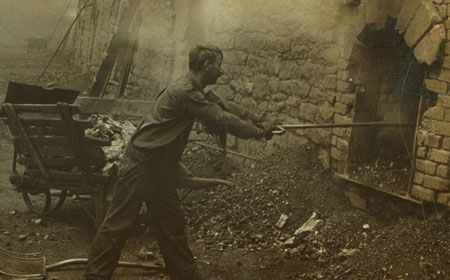
The Evolution of Coking by Making Coke on the Ground through Beehive Coking
A strange rock was known to exist as early as the ancient Greeks and the spread of that knowledge is often attributed to Theophrastus in his History of Stones c.371 BC.
The importance of coke, made from coal, useful for making iron, was not firmly established until the Darbys of Coalbrookdale, England used it as the sole source of fuel in a blast furnace in the early 1700s.
Coke is made by heating coal to eliminate the volatile products found in it. The resulting “char” consists mainly of carbon, but also includes the ash and some of the sulfur which was originally contained within the coal.
Methods of converting coal into coke involve three distinct techniques: coking in pits or piles; coking in beehive ovens; and finally coking in retorts. In this part of the program, we will briefly track methods of coking on the ground, but concentrate here on making coke in beehive ovens. It should be noted here that not all coals a capable of being converted into a useful product for making iron.
Speaker: Ken Kobus
Ken Kobus is a retired third-generation steelworker with over 40 years of service at J&L, LTV and USS. He is an experienced manager of cokemaking and coal chemicals facilities, as well as their maintenance and environmental management. He has a BS in mechanical engineering from the University of Pittsburgh.
Join us here at the Lukens Executive Office Building as we watch a nationally broadcast monthly talk presented by the Iron and Steel Heritage Forum.